



The short answer
The skin microbiome is the community of tiny living things, mostly bacteria, that live on the surface of your skin. When it's in balance, it helps keep your skin's protective barrier healthy, so skin feels calm, comfortable and hydrated.
In this article
You can't see it, but it's working for you every day. Here's what it is, what upsets it, and the simple things that help it stay in balance.
Does our skin have a microbiome?
Yes. Your skin is home to millions of bacteria, plus small numbers of fungi, viruses and tiny mites. After your gut, your skin carries more of these microorganisms than anywhere else on your body.
Most of them are harmless, and many are helpful. Different areas of skin have different communities: the oily areas of your face, the moist skin folds and the drier skin on your arms and legs each suit different bacteria. Your mix is also shaped by your age, genes, where you live and what you put on your skin.
What does the skin microbiome do?
Think of your skin like an apple. The good bacteria on your skin help keep its natural protective barrier healthy, just like the skin on an apple protects what's underneath.
In plain words, the good bacteria:
- Take up the space so less helpful bacteria find it harder to settle in.
- Make their own natural defences that help keep unwanted bacteria in check.
- Help train your skin's immune system to tell friend from foe, so it doesn't overreact.
- Help keep your skin slightly acidic. Healthy skin sits at around pH 4.7, and that acidity helps the good bacteria stay put.
Your microbiome and your skin barrier work as a team. When one struggles, the other usually does too.
What kills bacteria on your skin?
Your microbiome is fairly resilient. A normal wash won't wipe it out. But some everyday habits can shift the balance, especially when they're repeated morning and night.
- Harsh, foaming or high-pH cleansers. Alkaline products, and even plain tap water, can lift your skin's pH for a few hours. When skin is less acidic, the good bacteria lose their grip and wash away more easily.
- Antibacterial washes. They don't tell good bacteria from bad. The more you use them, the more they change your skin's bacteria, and those changes can still be there weeks after you stop.
- Over-cleansing and over-exfoliating. Scrubbing, strong acids and too many active products at once wear down the barrier the good bacteria live on.
- Hot water. It strips the natural oils that help hold your skin's moisture in.
- Medicines such as antibiotics. These are sometimes needed, so never stop a prescribed treatment. Just know your skin may feel more fragile for a while, and treat it gently.
What is skin microbiome imbalance?
Skin microbiome imbalance is when the usual mix of bacteria on your skin shifts. Instead of lots of different bacteria living happily together, the variety drops and one type starts to take over.
These changes show up in skin conditions like eczema, acne and rosacea. The science is still young, so we don't yet know whether the imbalance comes first or follows the condition. If you have a skin condition, your GP or a dermatologist is the right person to diagnose it and guide you.
What are the signs your skin's balance is off?
You can't see your microbiome, but you can feel when your skin's protective layer is struggling. In my treatment room, these are the signs I hear about most:
- Skin feels tight or squeaky after cleansing.
- Products that used to be fine now sting or burn.
- Dryness that no amount of cream seems to fix.
- Redness or patches that come and go.
- Breakouts and dryness at the same time.
If that sounds familiar, have a read of my page on sensitive and reactive skin.
How do you look after your skin microbiome?
When a client's skin reacts to almost everything, I don't add more. I cut their routine back to a few gentle steps that calm and support the skin's protective barrier. Most skin does best with less.
- Cleanse gently, morning and night. Choose a cream or gentle cleanser that doesn't leave your skin tight. Use lukewarm water, not hot.
- Keep your routine short. Fewer products means fewer things that can upset your skin. Bring in one new product at a time.
- Go easy on scrubs and strong actives. If your skin is stinging, give it a break.
- Moisturise every day. A good moisturiser helps your skin hold onto water and supports the barrier your bacteria live on.
- Feed the good bacteria with prebiotics. Prebiotics are a food source for the good bacteria already on your skin. Rather than adding new bacteria, you're looking after the ones that belong there.
- Skip antibacterial washes on your face unless your doctor has prescribed one.
- Look after the whole you. Drinking mostly water, moving your body and eating plenty of plants all support a healthy microbiome.
Where does MiTruIQ™ fit in?
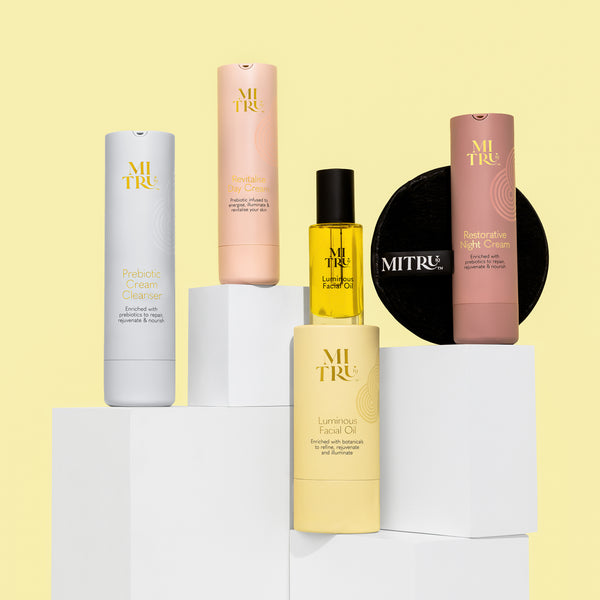
MiTruIQ™ is prebiotic, barrier-first skincare, made in New Zealand. Our cleanser and creams contain prebiotics, which help support your skin's natural balance. The cleanser is pH balanced and removes makeup and sunscreen without stripping. It's the cleanser that feeds your skin while it cleans.
Want the science in more detail? Read how prebiotics work.
Skin microbiome FAQs
Is the skin microbiome the same as the skin barrier?
No, but they work together. The barrier is the outer layer of your skin that holds moisture in. The microbiome is the community of bacteria living on it. A healthy barrier gives the good bacteria a good home, and they help keep the barrier healthy in return.
Can you wash away your skin microbiome?
Not with a normal, gentle wash. Your skin bacteria are fairly resilient. Harsh cleansers, antibacterial washes and over-cleansing, repeated day after day, are what shift the balance.
Do I need probiotic skincare?
Probiotics add bacteria. Prebiotics feed the good bacteria you already have. Your skin already has its own community, so MiTruIQ™ focuses on feeding it.
Does every MiTruIQ™ product contain prebiotics?
No. The cleanser, Day Cream, Night Cream and Hydrating Spray Shield contain prebiotics. The Facial Oil doesn't, because prebiotics aren't stable in oil. Instead, it's full of nourishing plant oils and extracts: Kakadu plum, raspberry seed and jojoba oils nourish without heaviness, algae oil sinks in fast with no greasy feel, and tomato and green tea antioxidants give a radiant-looking glow. It won Best Facial Oil 30+ at the Beauty Shortlist Awards 2026.
What if I have a skin condition like eczema, acne or rosacea?
Keep following your GP or dermatologist's advice. What's often overlooked is the skin barrier underneath. MiTruIQ™ uses prebiotics to support your skin's natural barrier, so it's a gentle everyday routine to use alongside their advice. Just check with them first if you're on a prescribed routine.

The routine I recommend most
The Core RitualCleanser, Day Cream and Night Cream. Morning and night.
5.0/5 from 64 reviews
$84.80 $106
30-day money-back guarantee, even if opened